
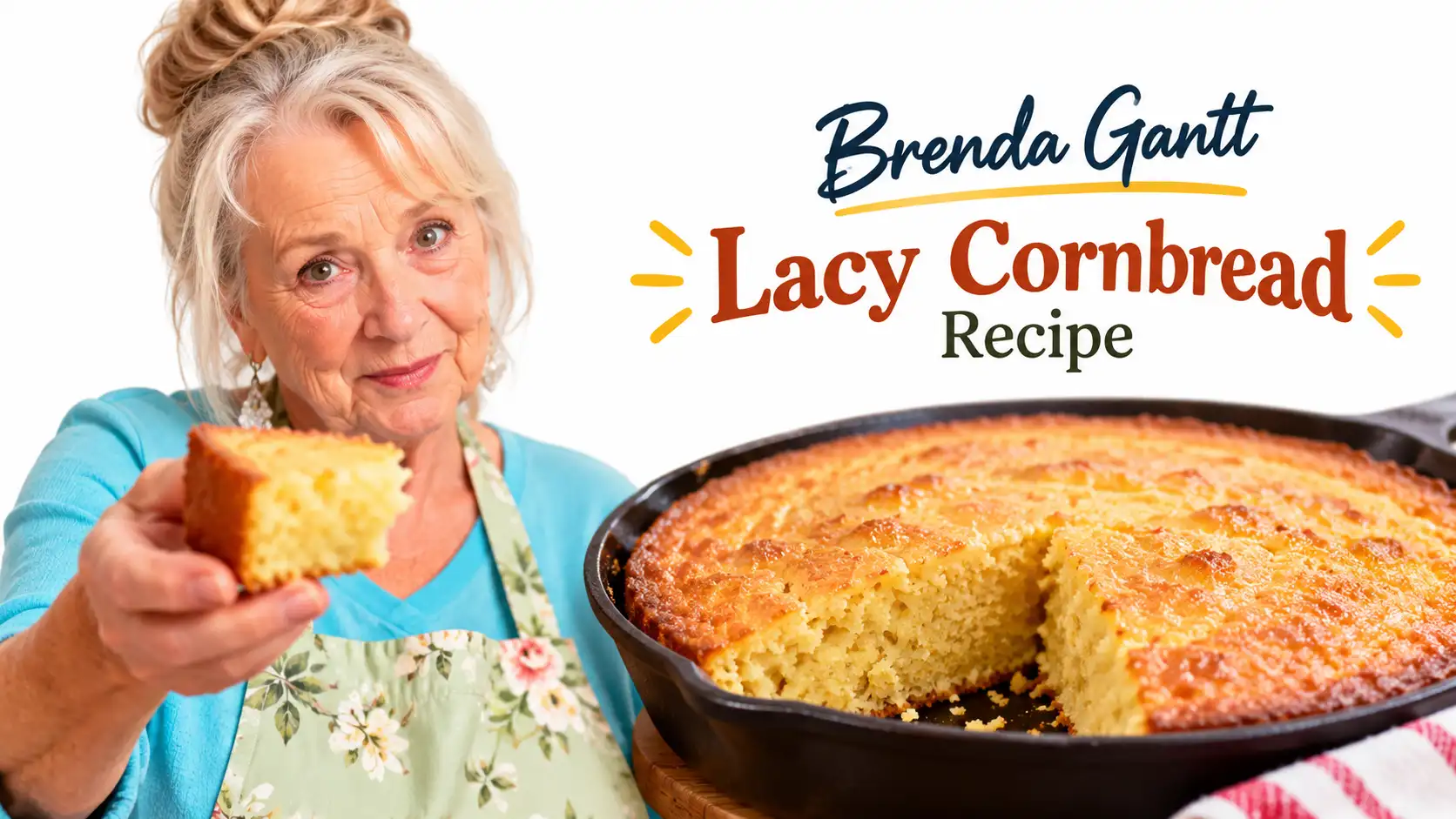
About Brenda Gantt’s Lacy Cornbread
Lacy cornbread is one of the most beloved dishes in Brenda Gantt’s kitchen. She has shared that she learned it as a young bride, after her husband George met an elderly woman in the Alabama backwoods who served a platter of it and taught him her generations-old method. Brenda says she learned to make it, and he learned to love it. The recipe later earned a place in her first cookbook, It’s Gonna Be Good, Y’all. To read more about her life and cooking, see her full biography.
What makes it special is how simple it is. There is no flour, no leavening, no eggs, and no milk, just cornmeal, salt, and hot water, fried in a hot skillet. The thin batter spreads out in the oil, so each piece fries up wafer-thin, crisp, and full of little holes with delicate lacy edges. This style is sometimes called hot water cornbread or lace cornbread, and it is a traditional Southern way of stretching a pantry staple into something special.
Lacy cornbread is meant to sit alongside a plate of vegetables, soups, or stews, where it can be broken up and used to scoop up pot liquor and gravy. It is also a natural partner for the comfort-food classics on this site, like chicken and dumplings, goulash, and fried squash.
Watch How It’s Made
Prefer YouTube? Watch the original video.
Brenda Gantt Lacy Cornbread Recipe
Ingredients
Makes about 16 thin pieces, enough for 8 servings of 2 pieces each.
Kitchen Tools Needed
- Cast iron skillet or griddle
- Medium mixing bowl
- Whisk
- Ladle or large spoon
- Thin metal spatula
- Paper towels
Not sure which skillet to buy or how to season it? See our kitchen guides.
Instructions
- Mix the batter. In a medium bowl, whisk together the cornmeal, salt, and hot water until completely smooth with no lumps. The batter should be thin and pourable. Let it stand for 5 minutes.
- Heat the skillet. Heat a cast iron skillet or griddle over medium to medium-high heat. Add 1 to 2 tablespoons of oil and tilt the pan to coat the surface. The oil should shimmer before you add any batter.
- Fry the cornbread. Stir the batter well, then ladle about 2 tablespoons for each piece into the hot oil, leaving space between them. The batter will spread thin and form lacy edges with small holes.
- Flip. When the edges are deep golden and crisp, after about 2 minutes, flip with a thin metal spatula and cook about 1 minute more, until golden.
- Drain and repeat. Transfer the cornbread to a paper towel-lined plate. Add a little more oil to the skillet and stir the batter again before each batch, since the cornmeal settles to the bottom.
- Serve hot. Serve right away while crisp, with vegetables, soups, or stews.
If the first piece comes out thick or won’t spread, whisk a tablespoon or two of hot water into the batter and try again.
Nutrition Facts
| Calories | 110 |
|---|---|
| Protein | 1 g |
| Carbohydrates | 13 g |
| Fat | 5 g |
| Fiber | 1 g |
| Sodium | 145 mg |
| Sugar | 0 g |
Nutrition values are estimates and are not a substitute for professional dietary advice.
Benefits of Lacy Cornbread
Just Three Ingredients
Cornmeal, water, and salt make up the whole batter, so there are no added sugars, preservatives, or fillers.
Whole-Grain Character
Stone-ground cornmeal keeps more of the corn kernel than highly refined meal, which means a little more fiber and nutrients.
Naturally Dairy- and Egg-Free
The batter has no milk, butter, or eggs, which makes it friendly for many dairy-free and egg-free diets.
Gluten-Free Ingredients
Corn is naturally gluten-free. If you need to avoid gluten strictly, choose cornmeal labeled gluten-free to avoid cross-contamination.
What to Avoid
Preparation Mistakes
- Don’t use self-rising cornmeal or cornmeal mix. The flour and leavening make a thick batter that won’t turn lacy.
- Don’t use cold water. Hot water softens the cornmeal so the batter spreads thin and fries crisp.
- Don’t skip stirring between batches. The cornmeal settles quickly, and the last batter in the bowl turns thick and pasty.
- Don’t crowd the pan. The pieces spread as they fry, and crowding makes them stick together.
- Don’t flip too early. Wait for crisp, golden edges so the piece holds together.
Storage Mistakes
- Don’t stack or cover it while hot. Trapped steam turns the crisp pieces soft and limp.
- Don’t refrigerate the batter for long. It thickens as it stands and loses its lacy texture.
Dietary Considerations
- Dairy-Free
- Egg-Free
- Vegan
- Gluten-Free Ingredients
- Fried in Oil
- Check Cornmeal Label for Cross-Contact
Pro Tips for Crispy Lacy Cornbread
- Use the right cornmeal. Plain, fine-ground white cornmeal gives the best lace. Stone-ground is the traditional choice.
- Get the oil hot first. Drop a bit of batter in; it should sizzle right away and start to lace at the edges.
- Aim for a thin batter. It should pour like thin pancake batter. Add hot water a tablespoon at a time if it is too thick.
- Use a well-seasoned cast iron skillet. It holds steady heat and keeps the thin pieces from sticking.
- Stir before every batch and add a little fresh oil to the pan each time.
- Salt right away. A pinch of salt on the hot cornbread as it comes out of the oil brings out the corn flavor.
For more tricks like these, browse our cooking tips.
What to Serve With Lacy Cornbread
Beverages
- Sweet tea
- Buttermilk
- Lemonade
Main & Side Dishes
- Chicken and dumplings
- Goulash
- Fried squash
- Golden broccoli casserole
- Pinto beans, field peas, or collard greens
When to Serve
- Vegetable plate suppers
- Soup and stew nights
- Sunday dinner
- Weeknight meals
Want a softer bread for the table? Try our buttermilk biscuits, or serve a plate of Brenda Gantt’s grits alongside.
Ingredient Substitutions
| Ingredient | Swap | Notes |
|---|---|---|
| Fine white cornmeal | Fine yellow cornmeal | Still crisps up; flavor is a little sweeter and heavier. |
| Peanut oil | Vegetable or canola oil | Neutral flavor with a similar smoke point. |
| Peanut oil | Bacon drippings | The traditional Southern option, with a smoky flavor. |
| Hot water | No substitute | Milk or buttermilk makes a thicker, softer batter and loses the lace. |
| Self-rising cornmeal or mix | Not recommended | Contains flour and leavening; the result will be thick and puffy. |
Storage & Reheating
Room Temperature
Best eaten right away. Leftovers keep on a wire rack, uncovered, for a few hours.
Refrigerator
Cool completely, then store in an airtight container with paper towels for up to 2 days. They will soften.
Reheating
Re-crisp on a baking sheet in a 350°F oven for 3 to 5 minutes, or in a dry skillet over medium heat. Avoid the microwave, which makes them soggy.
Make ahead: fry the cornbread up to a few hours before serving and re-crisp in the oven. Mix the batter fresh, since it thickens as it stands.
Frequently Asked Questions
Use plain, fine-ground white cornmeal, stone-ground if you can find it. Do not use self-rising cornmeal or cornmeal mix, which contain flour and leavening and make a thick, puffy batter instead of a thin, lacy one. Coarse cornmeal gives a gritty, heavier result.
The usual causes are batter that is too thick, oil that isn’t hot enough, or batter that hasn’t been stirred. Cornmeal sinks to the bottom, so stir before every batch. If the batter is thick, whisk in hot water a tablespoon at a time until it pours easily. Let the edges crisp and set before flipping.
You can, and it will still crisp up, but white cornmeal is the traditional choice and gives the classic mild flavor and delicate texture. Yellow cornmeal tends to taste slightly sweeter and a little heavier.
Peanut oil is a popular choice because it handles medium-high heat well and has a neutral flavor. Vegetable or canola oil also works. For a traditional Southern flavor, some cooks fry in bacon drippings.
It is best eaten right away while crisp. You can fry it up to a few hours ahead and keep it on a wire rack, uncovered. To re-crisp, warm the pieces in a 350°F oven or a dry skillet for a few minutes. Do not make the batter far in advance, since it thickens as it stands.
Not with the same results. The lacy edges and holes come from the thin batter hitting hot oil and frying. Baking gives a pale, flat cracker-like cornbread without the lacy texture. For the real thing, fry it in a cast iron skillet.
Reader Reviews
More Brenda Gantt Recipes
- Chicken and DumplingsA Southern comfort classic that pairs well with cornbread
- Brenda Gantt GoulashA hearty supper to serve alongside
- Fried SquashA Southern vegetable side dish
- Golden Broccoli CasseroleA cheesy vegetable casserole
- Buttermilk BiscuitsAnother essential Southern bread
- Brenda Gantt’s GritsA Southern staple for any meal
- Pound Cake BreakfastA sweet start to the morning
- Brenda Gantt’s BrowniesSomething sweet to finish the meal
- Cabbage CasseroleA creamy Southern casserole with a cracker topping
- All RecipesBrowse the full recipe collection
It’s gonna be good, y’all. Fire up the skillet and give it a try.
Back to Recipe