
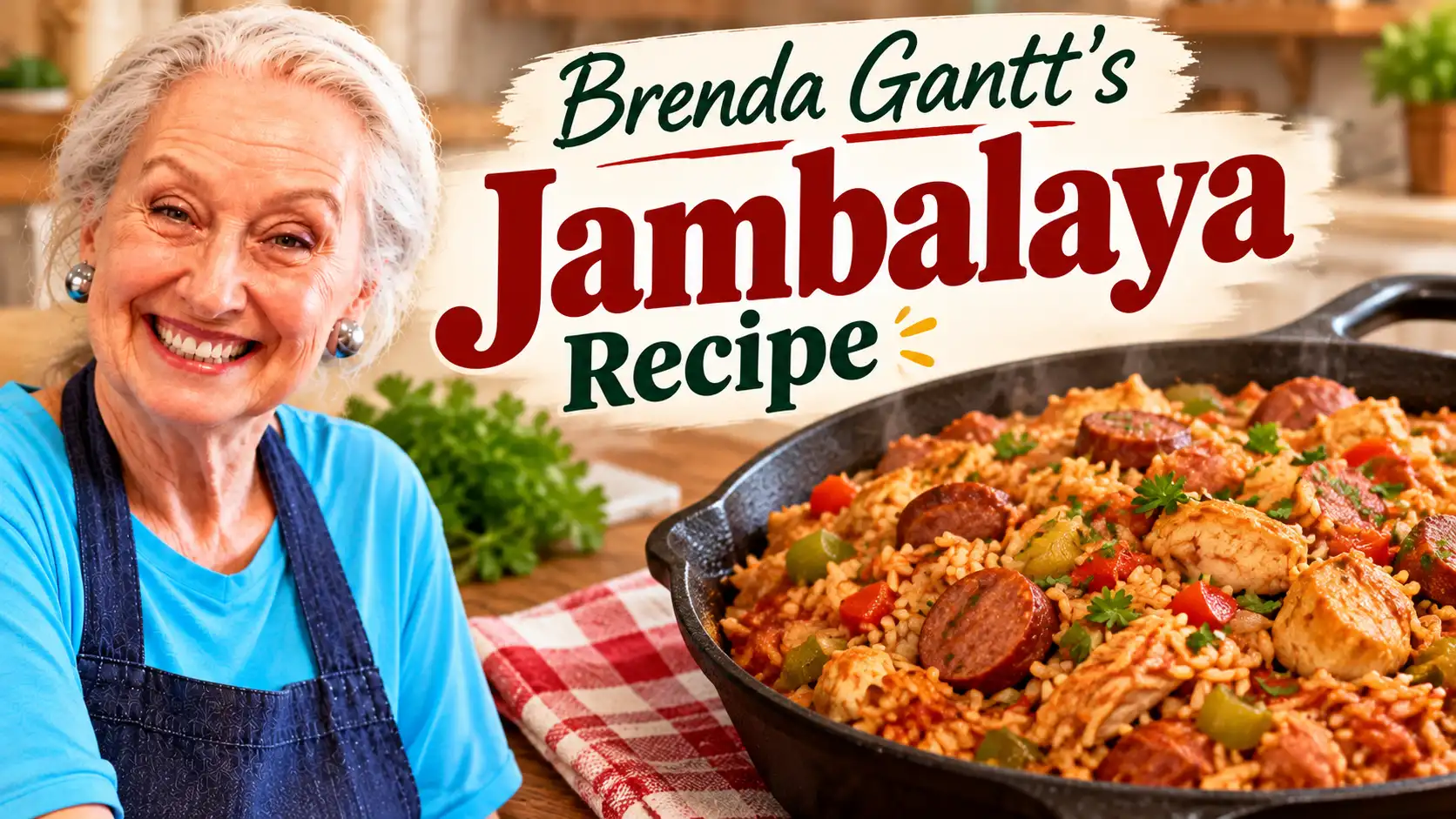
About Brenda Gantt’s Jambalaya
Brenda Gantt is known for down-home Southern cooking from her kitchen in Andalusia, Alabama, and her recipes often reach beyond Alabama into the wider Gulf South, where Louisiana’s Cajun and Creole traditions meet Southern comfort food. Jambalaya is one of those crossover dishes: a one-pot rice dinner built on the Cajun “holy trinity” of onion, bell pepper, and celery, along with andouille sausage, chicken, and shrimp.
Like her goulash, jambalaya is the kind of one-pot meal that feeds a crowd without a long ingredient list or fussy technique. Everything simmers together in a single pot, so the rice soaks up the flavor of the sausage, spices, and stock as it cooks.
Jambalaya has deep roots in Louisiana home cooking, with two main styles: Creole, or “red,” jambalaya, which includes tomatoes, and Cajun, or “brown,” jambalaya, which doesn’t. This version leans Creole with the tomatoes included, though it’s easy to leave them out if you prefer the Cajun style. Either way, it’s a filling main dish for a weeknight dinner, a potluck, or a Mardi Gras-themed gathering.
Watch How It’s Made
Prefer YouTube? Watch the original video.
Brenda Gantt Jambalaya Recipe
Ingredients
Jambalaya
Kitchen Tools Needed
- Large Dutch oven or heavy pot
- Sharp knife & cutting board
- Measuring cups & spoons
- Wooden spoon
Instructions
- Brown the sausage. Heat the olive oil in a large Dutch oven or heavy pot over medium-high heat. Add the sausage and cook until browned, about 8 to 10 minutes. Remove and set aside, leaving the drippings in the pot.
- Cook the vegetables. Add the onion, bell pepper, and celery. Season with a pinch of salt and cook, stirring occasionally, until softened and lightly browned, about 8 to 10 minutes. Stir in the garlic, smoked paprika, cayenne, thyme, salt, and black pepper; cook until fragrant, about 1 minute.
- Toast the rice. Stir in the rice and cook for 2 to 3 minutes, stirring often, until lightly toasted. Add the diced tomatoes and cook until they start to break down, about 3 to 5 minutes.
- Simmer the rice. Return the sausage to the pot. Pour in the stock and bring to a boil. Reduce the heat to low, cover, and simmer until the rice is just tender and most of the liquid is absorbed, about 20 to 25 minutes.
- Add the chicken and shrimp. Stir in the cooked chicken and shrimp. Cover and cook over low heat for 5 to 7 minutes, until the shrimp are pink and cooked through.
- Rest and serve. Remove from heat, cover, and let rest for 10 minutes. Fluff with a fork, taste and adjust the salt, and garnish with parsley and scallion before serving.
Keep the pot covered once the rice goes in. Lifting the lid lets steam escape and can leave you with unevenly cooked rice.
Nutrition Facts
| Calories | 480 |
|---|---|
| Protein | 32 g |
| Carbohydrates | 42 g |
| Fat | 19 g |
| Fiber | 3 g |
| Sodium | 980 mg |
| Sugar | 4 g |
Nutrition values are estimates and are not a substitute for professional dietary advice.
Health Benefits of Jambalaya
High in Protein
Shrimp, chicken, and sausage make this a protein-rich main course that helps keep you full.
Vitamin C from Peppers
Bell peppers are a good source of vitamin C, which supports immune health.
Lean Protein from Shrimp
Shrimp is low in fat relative to its protein content and provides selenium and vitamin B12.
Balanced One-Pot Meal
With protein, vegetables, and rice in one dish, jambalaya covers several food groups in a single serving.
What to Avoid
Preparation Mistakes
- Don’t skip browning the sausage. Those browned bits at the bottom of the pot build flavor into the rice.
- Don’t add the shrimp too early. Shrimp cook fast; adding them with the rice makes them tough and rubbery.
- Don’t stir the rice too often while it simmers. Stirring too much can make it gummy. Stir occasionally, not constantly.
Storage Mistakes
- Don’t store it while hot. Cool it fully first to prevent bacterial growth and a soggy texture.
- Don’t reheat shrimp more than once. Repeated reheating makes shrimp rubbery; reheat only the portion you’ll eat.
Dietary Considerations
- Contains Shellfish (shrimp)
- Contains Pork (sausage)
- High in Sodium
- Gluten-Free if using a certified gluten-free sausage and stock
Pro Tips for the Best Jambalaya
- Measure your liquid carefully. Too much stock makes the jambalaya mushy; too little leaves the rice undercooked.
- Use long-grain rice, which holds its shape better than short-grain varieties in a one-pot dish like this.
- Let it rest before serving. Ten minutes off the heat lets the rice finish absorbing moisture evenly.
- Taste before adding more salt. Andouille sausage and stock both bring plenty of sodium on their own.
- Make it ahead through the rice stage, then stir in freshly cooked shrimp just before serving for the best texture.
What to Serve With Jambalaya
Beverages
- Sweet tea
- Lemonade
- A crisp light beer
When to Serve
- Mardi Gras gatherings
- Sunday supper
- Potlucks
- Game-day meals
Ingredient Substitutions
| Ingredient | Swap | Notes |
|---|---|---|
| Andouille sausage | Any smoked sausage or kielbasa | Milder flavor and less heat than andouille. |
| Shrimp | Diced firm white fish or extra chicken | Add fish in the last few minutes, just like shrimp. |
| Chicken stock | Seafood stock or vegetable stock | Seafood stock adds extra depth if you’re using shrimp. |
| Diced tomatoes | Omit for Cajun-style “brown” jambalaya | Use a little extra stock to make up the liquid. |
| Long-grain white rice | Brown rice | Needs more liquid and a longer simmer time, about 15 to 20 minutes more. |
Storage & Reheating
Refrigerator
Cool completely, then store in an airtight container for 3 to 4 days.
Freezer
Freeze the rice and sausage portion for up to 3 months. Thaw overnight in the fridge, and cook fresh shrimp to stir in when reheating for the best texture.
Reheating
Warm gently on the stovetop with a splash of stock or water, or microwave individual servings, stirring halfway through.
Make ahead: cook through the rice stage, cool, and refrigerate. Reheat gently and stir in freshly cooked shrimp before serving.
Frequently Asked Questions
Jambalaya is best made fresh since the rice keeps absorbing liquid as it sits, but you can prep the sausage, chicken, and chopped vegetables up to a day ahead and refrigerate them separately. Cook the rice portion the day you plan to serve it, and add the shrimp at the very end so it doesn’t overcook when reheated.
Cajun jambalaya, sometimes called brown jambalaya, is made without tomatoes, so the color comes from browning the meat and vegetables. Creole jambalaya, or red jambalaya, includes tomatoes, which give it a reddish color. This recipe uses tomatoes, so it leans Creole-style, but you can leave them out for a Cajun version.
Yes. Jambalaya is flexible. Chicken thighs, ham, crawfish, or a firm white fish all work well in place of or alongside the shrimp and sausage. For a meatless version, swap in extra vegetables and use vegetable stock.
This usually means too much liquid was added or the rice simmered longer than it needed to. Measure the stock carefully, keep the pot covered once the rice goes in so liquid doesn’t evaporate unevenly, and check the rice a few minutes before the recipe’s suggested time.
Yes. Reduce or omit the cayenne pepper, and choose a mild smoked sausage instead of a spicy andouille. You can always add hot sauce at the table for anyone who wants more heat.
Yes, with one caveat: shrimp can turn rubbery after freezing and reheating. For the best texture, freeze the rice and sausage portion for up to 3 months, thaw it in the refrigerator, and cook fresh shrimp to stir in when you reheat it.
Reader Reviews
More Brenda Gantt Recipes & Guides
- GoulashAnother hearty one-pot Southern favorite
- GritsA classic Southern side that pairs perfectly with jambalaya
- Green BeansA simple, savory vegetable side dish
- Fried ChickenCrispy Southern fried chicken
- Fried SquashA crunchy Southern vegetable side
- Hush PuppiesGolden fried cornmeal bites
- Hot Water CornbreadSimple, crispy Southern cornbread
- Pound Cake BreakfastA sweet Southern breakfast classic
- Good Morning CakeA cozy cake to start the day
It’s gonna be good, y’all. Make it for your next family supper.
Back to Recipe