
To prepare okra for frying, choose firm pods, rinse them whole, and dry them completely. Then trim the ends, slice the pods evenly, and coat them right before frying. Dry okra holds a coating better and is much safer in hot oil.
Okra has a reputation for being slimy. Good preparation helps a lot, and this guide shows you how.
What You Need
- Fresh okra
- A clean cutting board and a sharp knife
- A clean kitchen towel or paper towels
- A bowl for sliced okra
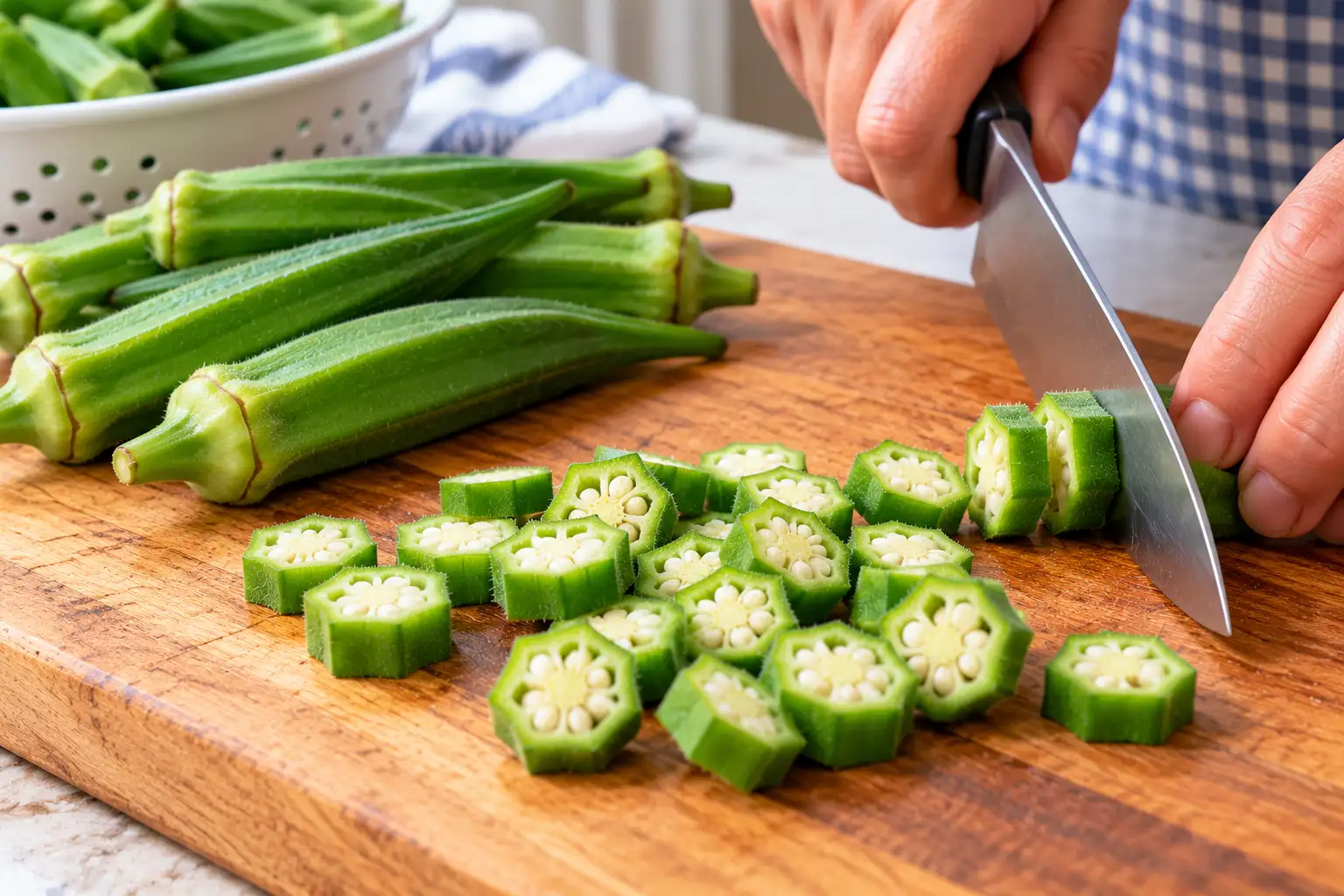
How to Prepare Okra for Frying: Step by Step
1. Choose fresh okra
Look for firm, bright pods. Skip any that look moldy, limp, dried out, or damaged. Smaller pods are often more tender, so pick pods of similar size if you can.
Mistake to avoid: Don’t add soft or bruised pods to the batch. They can cook unevenly and taste worse.
2. Wash the whole pods
Rinse the okra under cool running water. Wash them whole before you cut them. Washing whole pods keeps water out of the cut centers. If you want to rub off the light fuzz, do it gently while rinsing.
Mistake to avoid: Don’t wash okra and then leave it wet. Also, don’t wash it days before cooking. Moisture can make okra slimy in storage.
3. Dry it completely
Pat each pod dry with a clean kitchen towel or paper towels. Let the okra sit out for a few minutes to dry further.
This matters for two reasons:
- Surface water can keep the coating from sticking.
- Water that hits hot oil can make it splatter and cause burns.
Mistake to avoid: Don’t skip this step because the okra “looks dry enough.” Check for beads of water, especially near the stems.
4. Trim the ends
Yes, cut the ends off. Remove the stem cap and the thin tip. Try not to cut into the pod itself. Extension guides say to remove the stem and tip without opening the pod. This is most important when you cook okra whole.
Mistake to avoid: Don’t cut away too much. You lose okra and expose more of the inside.
5. Slice evenly
For fried okra, many cooks slice the pods into rounds about ½ inch thick. Even pieces cook at the same speed. Thick pieces take longer, and very thin pieces can overcook.
Some cooks cut the pods lengthwise into strips instead. This is an option, but strips won’t remove slime completely.
Mistake to avoid: Don’t slice far ahead of time. The more okra is cut, the slimier it gets, so slice it close to frying time. Make sure your knife, board, and hands are dry.
6. Manage extra moisture
If your sliced okra looks wet, blot it lightly with a paper towel. Keep the pieces in a single layer instead of a deep, wet pile.
Mistake to avoid: Don’t leave cut okra sitting in a bowl while you do other prep. Get the coating and oil ready first.
7. Coat it
Follow your recipe for the coating. Fried okra in the South is often coated with cornmeal, flour, or a mix of both. Cornmeal gives a crunchy texture. Flour makes a lighter coating. Neither is “the one right way.”
Some recipes add a wet step, such as buttermilk or egg, before the dry coating. That is part of the recipe, not leftover wash water. Still, coat okra shortly before frying. A coating can turn gummy if it sits on wet okra for too long.
Mistake to avoid: Don’t pile on too much coating. A thick, heavy crust can taste doughy.
8. Fry right away
Fry soon after coating. Use a heavy pot or skillet with deep sides. Use a thermometer so you know the oil temperature. Fry in small batches so the pan isn’t crowded. Lower food in carefully with a slotted spoon.
Why Okra Gets Slimy
Okra naturally contains a thick, sticky substance called mucilage. It is what thickens gumbo. Cutting okra releases it, and extra water can make it feel worse.
You can’t always remove it completely. You can manage it:
- Keep okra dry from start to finish.
- Cut it just before cooking.
- Don’t cut it smaller than you need to.
- Fry it in hot oil in small batches, so it doesn’t sit in steam.
Should you soak okra before frying? Not as a rule. Extension guides don’t recommend it. Some cooks soak okra in vinegar, then rinse and dry it well. That is a popular trick, not a proven fix, and it adds water you must dry off. If you try it, dry the okra very well afterward.
Fresh Okra vs. Frozen Okra
Fresh okra usually gives the best texture for frying. Frozen okra is a handy backup when fresh isn’t available.
- Thawing: Sources disagree. Some say to fry frozen okra straight from the freezer. Others say to thaw it and pat it dry. Follow the instructions in your recipe.
- Moisture: Frozen okra can carry ice crystals and release water as it thaws. If you thaw it, drain and blot it well.
- Texture: Frozen okra can be softer than fresh, so the result may be less crisp.
Frozen okra works fine when you need a quick, convenient option.
Can You Prepare Okra Ahead of Time?
Whole, unwashed, dry pods keep in the fridge for two to three days. Keep them in a paper bag or loosely wrapped in a paper towel. I did not find a reliable guideline for how long cut okra keeps, so slice it close to frying time. Refrigerate leftover fried okra within two hours.
Common Mistakes
- Using wet okra. Dry it well to help the coating stick and to lower the risk of splatter.
- Cutting uneven pieces. Cut pieces to a similar size so they cook together.
- Leaving damaged pods in. Check each pod and set aside any that are soft, moldy, or bruised.
- Too much coating. Shake off the extra so the crust stays crisp, not heavy.
- Letting okra sit too long. Coat and fry soon after slicing.
- Overcrowding the pan. Fry in batches so the oil stays hot.
- Wrong oil temperature. Oil that is too cool makes okra greasy. Oil that is too hot can burn the coating before the okra cooks. Use a thermometer.
Ready to Fry?
Once your okra is washed, dried, trimmed, and sliced, you are ready to cook. Follow our Southern Fried Okra Recipe for the next steps, including coating, seasoning, and frying.
Frequently Asked Questions
Should you wash okra before frying?
Yes. Rinse the whole pods under cool running water, then dry them well before cutting.
How do you dry okra after washing?
Pat each pod with a clean towel or paper towels. Let them air-dry briefly if needed.
How thick should you slice okra for frying?
About ½ inch is common. Keep the pieces even.
How do you keep fried okra from becoming slimy?
Keep it dry, cut it just before cooking, and fry it in hot oil without crowding the pan.
How do you get fried okra crispy?
Start with dry okra, use a light, even coating, and keep the oil at a steady temperature. Fry in small batches.
What is the best coating for fried okra?
Cornmeal is a classic for crunch. Flour makes a lighter crust, and many cooks use both.